Prom 58: Debussy, Stravinsky & Berlioz – Orchestre de Paris with Klaus Mäkelä
Claude Debussy
Prélude à l’après-midi d’un faune
Igor Stravinsky
Petrushka (1910-11, rev. 1946)
Hector Berlioz
Symphonie fantastique
Jean-Baptiste Doulcet (piano – Petrushka)
Orchestre de Paris – Philharmonie
Klaus Mäkelä
Reviewed by: Chris Caspell
Reviewed: 3 September, 2024
Venue: Royal Albert Hall
As the world eagerly turns its gaze to Paris for the 2024 Olympics, Parisian artistry graced London’s Royal Albert Hall in the form of the Orchestre de Paris – Philharmonie under the baton of their dynamic music director, Klaus Mäkelä. The evening’s program—Debussy, Stravinsky, and Berlioz—was a veritable showcase of French flair, imbued with Mäkelä’s signature energy and precision.
The concert opened with Debussy’s Prélude à l’après-midi d’un faune, a work often heralded as the harbinger of modern music. While it’s been anecdotally called the first true piece of atonal music, Debussy himself remarked that it has “no respect for tonality,” a claim that belies its lush harmonic landscape. Mäkelä’s interpretation was dreamy, almost languorous, evoking more of Delius’s pastoral idylls than Debussy’s Parisian chic. Principal flautist Anais Benoit embodied the faun’s capricious spirit with a delicate yet sinuous performance, swaying with the music as if in dialogue with the mythical creature itself. Mäkelä, notably batonless for this piece, sculpted the sound with a fluidity that allowed the music to breathe and unfold organically.
Following a brief off-stage interlude, Mäkelä returned to the podium with a burst of energy, launching into Stravinsky’s Petrushka with a vigour that momentarily caught the orchestra—and the audience—off guard. The initial surprise gave way to a performance of sharp rhythmic clarity, where Stravinsky’s meticulous demands for accent and articulation were met with unerring precision. Mäkelä’s attention to detail was meticulous, though not without a few personal touches. One could detect a hint of Stokowski in the added percussion—an extra side drum subtly inserted at pivotal moments. The climactic moment when Petrushka’s tambourine should fall flat to signal his demise was a tad overdone, the instrument landing with more force than one might expect from a sawdust-filled puppet. These were, however, minor quibbles in what was otherwise a kaleidoscopic and riveting performance, rich in the colour and nuance that too often elude concert renditions of this work.
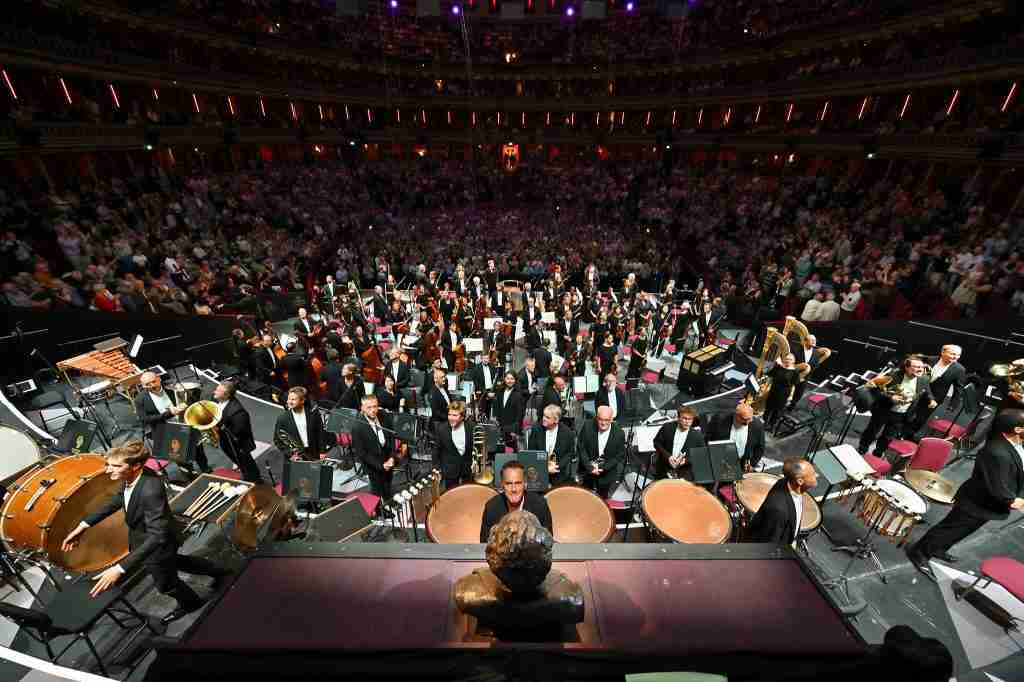
After the interval, the orchestral layout underwent a subtle but significant change, with the violas swapping places with the second violins, adding a new dimension to the soundscape for Berlioz’s Symphonie fantastique. This five-part fever dream of a symphony received the Orchestre de Paris’s full attention, the strings once again proving their mettle with a sound that filled the hall from floor to rafters. Mäkelä’s interpretation brought out the contrasts in the score with razor-sharp clarity: orchestral pianissimos were so delicate they were barely there, while fortissimos shook the very foundations of the hall.
One moment of dubious drama occurred in the first movement, where the second violins engaged in an overblown crescendo-decrescendo that felt more melodramatic than effective. Yet, aside from this, the performance was exemplary, revealing subtleties in Berlioz’s writing that are often overlooked. Mäkelä moved directly from the first movement into the second without a pause, a decision that stymied premature applause but couldn’t completely silence the persistent coughs that seem to plague quiet passages at the Proms. The Ball waltzed along with vivacious charm, and the dual harps added a luxuriant sheen to the texture.
The Scene in the Countryside was notable for its forward momentum, never allowed to linger or sag. An off-stage oboe, responding to the cor anglais, was stationed high in the gallery—an unusual choice that, while striking, could have been more effective with a subtler dynamic. The quartet of timpanists at the movement’s close provided a visual and aural spectacle, their synchronised playing adding to the growing sense of drama.
Mäkelä drove the March to the Scaffold at a brisk tempo, perhaps a bit too brisk for the bassoons and cellos, whose ensemble wasn’t as tight as one might have hoped. Nevertheless, the movement was exhilarating, the timpanists clearly enjoying themselves as they hammered out Berlioz’s grim march with gusto. The final movement, Dream of a Witches’ Sabbath, was a tour-de-force of diabolical energy, the orchestra conjuring up a nightmarish vision with eerie bells (off stage) summoning Berlioz’s hellish apparitions. The strings, playing col legno, created a bone-chilling effect as skeletal figures danced in macabre glee.
On paper, this was a program of well-trodden classics, a sure-fire crowd-pleaser. Yet Mäkelä and his Parisian forces elevated it to something far beyond the ordinary, delivering performances of such vivid imagination and technical brilliance that the standing ovation from the packed hall was not only inevitable but richly deserved.
Prom 58: Debussy, Stravinsky & Berlioz – Orchestre de Paris with Klaus Mäkelä Read More »