
Vivaldi
Sinfonia in C, RV112
Serenata a tre ‘Mio cor, povero cor’, RV690 – Serenata in two Parts to a libretto by Antonio Maria Luchini [sung in Italian]
Eurilla – Valeria La Grotta
Nice – Arianna Vendittelli
Alcindo – Valentino Buzza
Modo Antiquo
Federico Maria Sardelli
Reviewed by: Curtis Rogers
Reviewed: 28 October, 2025
Venue: Wigmore Hall, London
The Serenata by Vivaldi, named from its opening aria ‘Mio cor, povero cor’ for want of any other title on the manuscript, is one of three such works – effectively small scale, unstaged operas – that survive by the composer. (La Senna festeggiante was programmed by the Wigmore Hall back in 2019 and reviewed by this site.) It isn’t known exactly why it was written or when, though it seems likely to be connected with the French nobleman Anne-Marc Goislard du Toureil, who lived in Venice and nearby from 1716.
The Arcadian theme is typical of such works in dealing with the trials of love between a shepherd (Alcindo) and shepherdess (Eurilla) as she seeks to overcome his proud disdain with the assistance of her confidante, Nice, when she falls in love with him. He would rather remain free and unfettered in love – expressing himself in a matter that partly echoes the archetypal libertine, Don Giovanni. But there is a twist at the end: when he inevitably succumbs to her charms and she is sure that he is now serious, Eurilla calls down punishment upon his arrogance, urging the nymphs, like maenads, to taunt him mercilessly. If the Serenata were composed for the wedding of du Toureil in 1718, as is one supposition, it offered a blunt lesson in how to love sincerely.
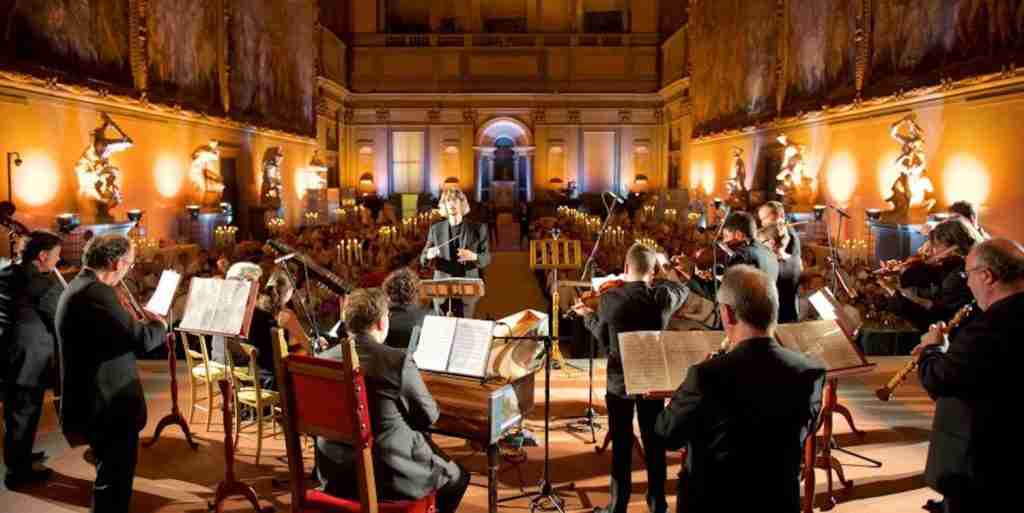
Federico Maria Sardelli and Modo Antiquo’s performance infused the work’s regular sequence of arias and recitatives with captivating vigour, alternating playfulness, passion and irony. Although drama is generally lacking in the simple narrative, it was foregrounded in the music here instead, with dynamic contrasts between adjacent phrases within arias like a continual play of light and shade, and with the often-rhetorical articulation of the instrumental melodies. The sturdy continuo line gave the music a robust but lively footing, and vibrant oboe, bassoon and violin solos added arresting colour in some arias. The mood was set by prefacing the work with a bracing account of the Sinfonia, RV112, ending with a boisterous third movement.
The two sopranos were well contrasted. Valeria La Grotta was refulgent with a finely sustained tone across some energetic vocal lines. But she deployed more flirtatious levity (the triplets of ‘La dolce auretta’) or deeper colour (the hunt-inspired ‘Alla caccia d’un cuore spietato’) to enhance the Affekt of certain arias or at least their da capo repeats, particularly as the innocent shepherdess grew in understanding about the wilful nature of love. As her more knowing friend Nice, Arianna Vendittelli brought a more incisive, throaty emphasis to her music, for instance with a feisty, rocketing little cadenza in her first aria and a comic insistence on the syllable “no”. (Vivaldi fans will have already encountered her on at least one CD issue of the Naïve label’s ongoing Vivaldi Edition.)
Valentino Buzza was a heavy-voiced shepherd, certainly conveying Alcindo’s overbearing pride with his vocal swaggering, ironically underlined by fluttering oboes in his first aria, and the vividly chuntering solo bassoon and double bass continuo alone for ‘Dell’alma superba’. But he tended to project too forcefully where a lighter tenor would have suited better the subtler beauties of Vivaldi’s delightful score. For instance, a softer hue would have balanced better in the opening aria of the second Part, with its rippling strings to depict flowing waters (reminiscent of the first episode of the ‘Spring’ Concerto’s first movement). But overall, what looks on paper like an unpromising sequence of unvaried arias, was evocatively characterised by singers and ensemble here, bringing an enchanting Venetian revel to an autumnal London evening.
Wigmore Hall – Vivaldi’s La Senna festeggiante – Arcangelo & Jonathan Cohen with Emőke Baráth, Anna Reinhold & Callum Thorpe: https://www.classicalsource.com/concert/wigmore-hall-vivaldis-la-senna-festeggiante-arcangelo-ke-barath-anna-reinhold-callum-thorpe/